

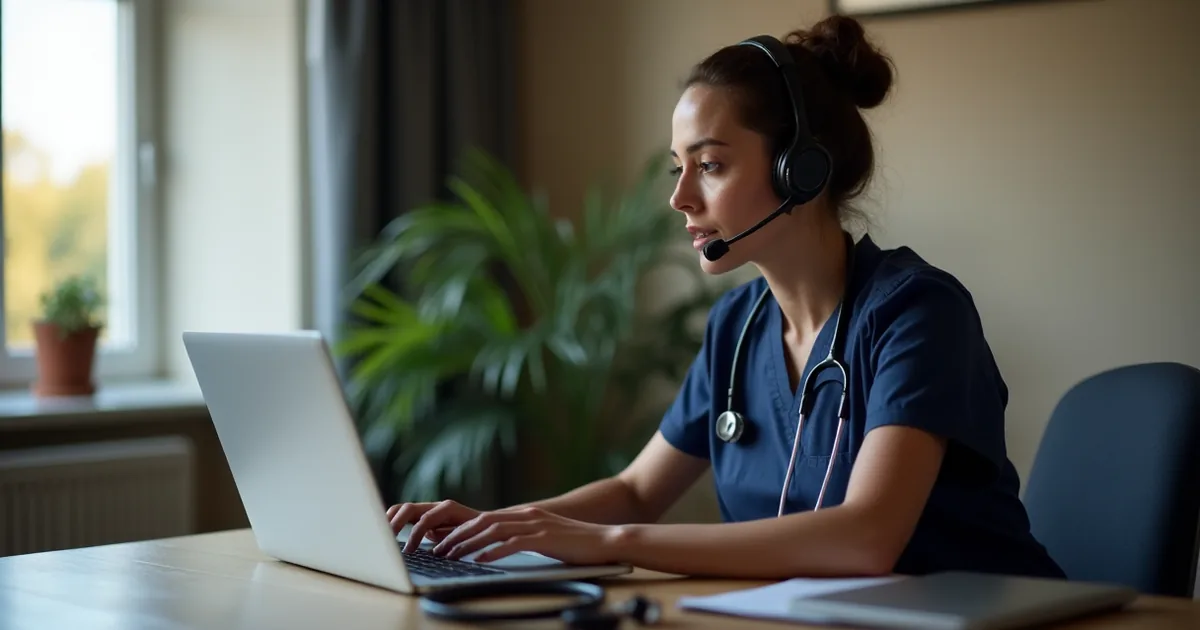
Remote nursing jobs in the UK are mostly telephone and video roles for registered nurses with a few years of clinical experience: NHS 111 clinical advisor, GP and urgent-care telephone triage, health assessments for benefits, occupational health and insurer nurse lines. Desk-based alternatives include clinical safety, drug safety (pharmacovigilance), clinical coding and medical writing. Home working is often granted only after a period on site, and you keep your NMC registration and revalidation. NHS-equivalent clinical advisor posts are commonly pitched around Agenda for Change Band 6 (from £39,959 in England, 2026/27).
Which nursing jobs can you do from home?
Remote nursing is a specialist corner of the genuine work from home jobs market: the roles exist, but almost all need registration and clinical experience. The table sorts them from most to least patient-facing.
| Role | What you do | Usually needs | Remote pattern |
|---|---|---|---|
| NHS 111 clinical advisor | Telephone assessment of urgent-care calls using NHS Pathways | NMC (or HCPC) registration; often 2+ years’ acute, primary or community experience | Home working often after training or probation on site |
| Telephone triage nurse (GP, out-of-hours, urgent care) | Assessing patients by phone or video, booking or advising | Triage or minor illness experience; prescribing helps | Remote or hybrid |
| Health assessor (disability benefits) | Functional assessments for PIP and Work Capability Assessments for DWP contractors | Registered nurse, usually 1–2+ years post-registration | Phone and video assessments; face-to-face share rising |
| Occupational health nurse advisor | Fitness-for-work and absence assessments for employers | Occupational health experience or qualification for senior posts | Often telephone-based |
| Insurer or healthcare-provider nurse line | Health advice and case management for members | Broad clinical experience | Remote or hybrid |
| Remote mental health nurse roles | Telephone crisis lines, triage, digital therapy services | RMN registration and mental health experience | Remote or hybrid |
What desk-based roles suit nurses who want to stop patient contact?
- Clinical safety officer: checks that health IT systems are safe under the NHS standards DCB0129 (manufacturers) and DCB0160 (organisations deploying systems). Requires a registered clinician; training courses are available. Often remote.
- Pharmacovigilance / drug safety associate: processes and assesses adverse-event reports for pharmaceutical companies and contract research organisations. Clinical knowledge is valued; many posts are hybrid or remote.
- Clinical coder: turns clinical records into coded data. Not nurse-only, but clinical background helps; national clinical coding qualifications exist.
- Medical writer or educator: patient information, training materials, online courses. Builds on the routes in our writing jobs from home guide.
- Clinical research roles: some trial monitoring and data roles are home-based, though research nurses usually work on site and clinical research associates travel.
What do remote nursing jobs pay?
NHS posts follow Agenda for Change; independent providers often advertise an equivalent band or an hourly rate. England pay scales from 1 April 2026:
| Band (England, 2026/27) | Entry | Top | Where remote roles sit |
|---|---|---|---|
| Band 5 | £32,073 | £39,043 | Some triage and assessor roles |
| Band 6 | £39,959 | £48,117 | Common for NHS 111 clinical advisors and experienced triage |
| Band 7 | £49,387 | £56,515 | Senior clinical advisors, clinical leads, clinical safety |
Scotland, Wales and Northern Ireland have their own pay awards. Private providers’ adverts vary; past NHS 111 adverts from independent providers quoted hourly rates in the low-to-high £20s. Check whether unsocial hours enhancements apply – much telephone work is evenings, nights and weekends (see night shift work from home).
What conditions come with home working?
Telephone clinical roles carry the same accountability as face-to-face care, so employers set strict rules:
- On-site first: many providers require training and several months on site before home working; some only allow remote work if you live far from a centre.
- Private, secure space: a lockable room where calls can’t be overheard, and no one else uses the equipment.
- Wired broadband and the employer’s laptop, headset and secure software – never your own device for patient records.
- Call recording and audit: calls are recorded and reviewed against clinical standards.
- Availability for site days for training, supervision or cover.
How do registration and revalidation work remotely?
Remote roles still count as nursing practice if they use your nursing knowledge. You keep your NMC registration, follow the NMC Code and revalidate every three years: 450 practice hours, 35 hours of CPD (20 participatory), five pieces of practice-related feedback, five written reflective accounts, a reflective discussion, a health and character declaration, an indemnity arrangement and confirmation by a third party. Purely non-clinical jobs may not count towards practice hours – check the NMC guidance before leaving clinical work for long.
Check the role, not the title: if a job requires registration, your employer should provide indemnity cover through its own arrangements. Self-employed or agency remote work may require your own – ask before you start.
How do you move into a remote nursing role?
- Build telephone-relevant experienceMinor illness, urgent care, emergency department or community experience is what triage employers look for.
- Target NHS 111 and urgent-care providersSearch NHS Jobs for “clinical advisor”, “NHS 111” and “home working”; ambulance trusts and independent providers both recruit.
- Take on-site training seriouslyNHS Pathways training and supervised calls usually come first – plan for a few months before home working.
- Add a qualification for non-clinical movesClinical safety, coding or pharmacovigilance courses help you switch without starting from scratch.
- Check the rotaRemote clinical work is often 24/7: confirm shift patterns, minimum hours and enhancements before accepting.
Questions about remote nursing jobs
Can nurses work from home in the UK?
Yes, mainly in telephone and video roles such as NHS 111 clinical advisor, telephone triage, health assessments and occupational health, plus desk-based roles like clinical safety and drug safety.
Do I need experience for a remote nursing job?
Usually yes. Most remote clinical roles ask for one to two or more years of post-registration experience, often in acute, urgent, primary or community care.
What band is an NHS 111 clinical advisor?
Commonly Band 6 or an equivalent rate with independent providers. Band 6 in England starts at £39,959 from April 2026.
Are there remote mental health nurse jobs?
Yes, for registered mental health nurses in crisis lines, triage and digital therapy services, usually remote or hybrid.
Does remote work count for NMC revalidation?
It counts as practice if the role uses your nursing knowledge and skills. Check the NMC’s revalidation guidance if your role is purely non-clinical.
More on this route: the main guide covers the whole topic – genuine work from home jobs.